I'll travel exactly two astronomical seconds to meet you.
Relative to the universe's own rest frame, you and I are already hurtling through the cosmos together at about 370 km/s, so my dating radius is simply two seconds of that motion: ≈740 km / 460 miles, and the physics is settled. The mileage, though, is negotiable by aircraft: any US city I can reach on the same wall clock also qualifies, and The Remix has the rule and the map. None of it asks to be taken on faith, either: every claim on this site comes with a prompt you can hand to the AI of your choice, whenever curiosity strikes. Or never; they'll keep.
Skeptical? Healthy. The Audit Ledger is there whenever you want it: the physics is Audits 01–04, and the life philosophy runs 05–21.
In a hurry? Family, Dealbreakers, and What You Get carry the plot. Everything else is appendix, and the Contents page maps it by chapter.
Contents
Thirty-odd sections is a lot of rail to scroll. Here they are in chapters, in reading order.
In a hurry? Family, Dealbreakers, and What You Get carry the plot. The rest is appendix, and it keeps.
The Airline Remix
The radius was always a time budget in a distance costume. Time budgets transfer between vehicles.
The benchmark. Driving 460 miles takes about 7 hours 4 minutes at a 65 mph average. So what the radius actually promises is roughly seven hours of my full attention spent getting to you, and hours, unlike miles, don't care what vehicle you pick.
The rule. Any city in the United States qualifies if a nonstop flight delivers me inside the same clock. My chain: 30 minutes from my door to the airport entrance, 45 minutes from the entrance to boarding (carry-on only, TSA PreCheck), the flight itself, then 15 minutes from jet bridge to your curb. Subtract the overhead from 7:04 and the flight may spend 5 hours 34 minutes gate to gate.
The qualifying set. A five-and-a-half-hour nonstop from South Florida reaches nearly the whole country: Washington (2:35), New York (3:00), Chicago (3:15), Dallas (3:00), Denver (4:20), Phoenix (5:10), Las Vegas (5:15), San Diego (5:30), and Los Angeles, which lands almost exactly on the line at 5:35 against the westbound winds. The holdouts cluster in one corner: San Francisco misses by about half an hour, Portland by fifty minutes, Seattle by a full hour. Two seconds of cosmic motion buys the whole map except the Pacific Northwest.
The fine print. Nonstops only, since a single connection detonates the whole budget, and the real constraint is now the route map: the clock is generous, but a city only qualifies if somebody actually flies there nonstop from South Florida. Airline schedules change quarterly, so the qualifying set breathes the way the original radius breathes with Earth's orbit. And the chart below is exactly that, a chart: dots on a projection, drawn to make a point.
The drive math, the overhead chain, and the block times: Audit 12.
Who I Am
Basic characterization data. Spectral analysis ongoing.
Former science teacher, current founder-engineer — which means I explain things for fun and build things for a living, and I genuinely can't tell you which one is the job. Licensed drone pilot, so technically certified to operate in three dimensions while dating in two.
AGE 40.4 yrs (counting) · HEIGHT 5'10" / ~177 cm · MASS ~190 lb / ~86 kg · pretty average for an American male, neither tall nor short
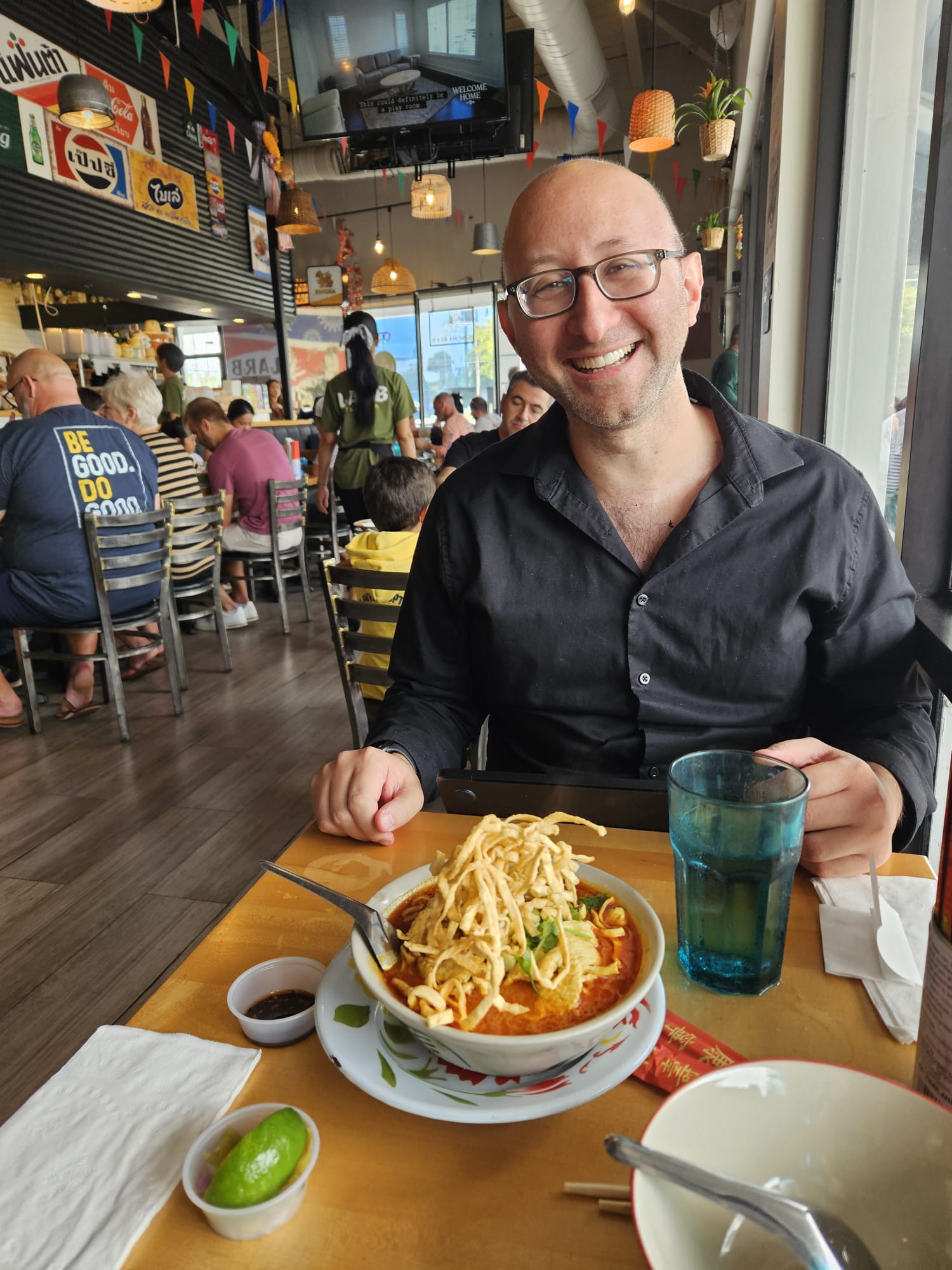


FIG. 01 · 2025-04-06 · FIG. 02 · 2024-08-19 · FIG. 03 · 2025-03-31 · THE OBSERVER IN THE FIELD AND ABOVE IT · KHAO SOI NOT INCLUDED · UNCHANGED SINCE; MORE RECENT ON REQUEST
Citizenship: triple. The United States, Portugal, and Israel. Three passports, three shelves of history, and for our future kids, three sets of doors that stay open: places to study, live, work, and belong.
The longer version. I taught science before I built software, and the teaching never stopped; it changed rooms. The building is Lifesaver Labs: CtrlAltM⏻ve, which locks my screens until I've exercised, Neighbor 911, Safeword, which carries a granted US patent, and Five Nines Fertility. Before that I held jobs in Montreal, France, and China. I've jumped out of an airplane exactly once (FIG. 03), I fly drones on a license, I dance salsa when the chance comes and would happily dance with you for the rest of my life. I'm an independent voter, a Jew who runs anywhere from glatt kosher to Chipotle, and a graduate of the school of very hard knocks who came out curious instead of bitter. What I want is on every other page of this site: a partner, two or three kids, and the decades it takes to enjoy them.
The range. I've done real coursework in health sciences, law, economics, business, and computer science, and I've used all five: the patent, the EMT certification I'm working toward, the finances on The Work, the companies, the code. None of it came with the diploma that usually goes with it, so I hold the opinions loosely and argue them cheerfully. Bring up almost any topic and I'll have some background and an early view. The Erasmian ideal, a life of action and a life of mind in one person, is the one I'm chasing.
Languages. English natively, with most of its technical dialects. Intermediate French, beginner Spanish, beginner Hebrew from childhood Hebrew school, and beginner Portuguese picked up as an adult. One lesson learned the hard way: app-only language study, without classes or immersion, never got me to the fluency a wife would need from me. If our happiness depends on your mother tongue, we budget for formal classes, and you bring patience while I practice.
I build software for emergencies and for trust — systems that have to work when it matters most. I bring the same philosophy here: everything on this site is checkable if you ever care to check, and it matters more to me that you could than that you do.
Ask me about the time being wrong in public taught me more than being right, or why I think the two best first-date questions are "what do you believe that you can't prove?" and "what have you changed your mind about that you once felt strongly on?"
What You Get
The other side of the ledger: what being loved by me is actually like.
The Tuesday test. Grand gestures are cheap to promise and rarely needed. A marriage is mostly Tuesdays, so judge me on the Tuesday forecast: coffee handled, my half of everything domestic done without being asked, a walk after dinner, two people reading in the same room and interrupting each other with the good parts. I explain things for fun and I listen the same way; you will never finish telling me about your day to a man scrolling his phone.
When it's hard. I build software for emergencies; calm under pressure is literally my trade. When you're sick, I run the household solo and cancel what needs canceling. When you're grieving, I don't vanish into fix-it mode unless you ask for fixes. When we disagree, you've read the Dealbreakers page: negotiating table, never a battlefield, and the Feedback Clause means complaints get repaired instead of archived.
When it's good. Teacher instinct: I brag about the people I love and I'm not discreet about it. Your wins get celebrated at full volume, your name gets defended in rooms you're not in, and the salsa offer stands for life: you will be danced with.
The warmth. I'm an affectionate partner: hands held in public, a real hug at the airport, dancing in the kitchen while dinner cooks. The engineering brain runs the spreadsheets. It does not run the marriage.
The attention. The honest pitch is right in front of you. You've seen the attention I paid to a website about finding you; point that same attention at loving you for fifty years and you have the actual offer. This site is the demo.
Hold me to all of it: the Feedback Clause works after the wedding too.
The Shelf
The Dealbreakers page says reader; this is where the evidence goes. Six shelves stocked, and the catalog stays open.
-
Shelf 01
Books
Twenty-six spines, grouped the way they live in my head.
On media and minds: Amusing Ourselves to Death (Postman), You Are Not a Gadget (Lanier), The Design of Everyday Things (Norman), Habit (William James), and The Cambridge Handbook of Expertise and Expert Performance.
Fiction I evangelize: the Three-Body trilogy, the Ender's Game quartet, Stranger in a Strange Land, Cloud Atlas, The Giver, the Harry Potter series, and Catch-22.
War, witnessed: War and Peace, Hiroshima (Hersey), and The Sorrow of War (Bảo Ninh).
Builders and healers: Mountains Beyond Mountains, The Snowball, The Illusions of Entrepreneurship, Coders at Work, and Paul Graham's essays.
Older wisdom: On Liberty (Mill), Pirkei Avot, 1000+ Greatest Poems, Our Nation's Archive, and the innumerable opinions of the Supreme Court.
The kitchen shelf: How to Cook Everything (plus the vegetarian edition) and Food Rules (Pollan).
The anti-recommendation: Thoreau's Civil Disobedience. No book on this shelf has gotten me into more trouble. It romanticizes resistance to unjust laws in a way that leaves the protesters who follow him exposed to far harsher punishment than Thoreau ever faced. He had accomplices in conditioning my occasional civil-disobedience streak: King's Letter from Birmingham Jail, Gandhi's life and writings, Antigone burying the brother Creon had declared a traitor, and Kohlberg's theory of moral development, which crowns postconventional, self-authored moral reasoning as the highest stage, all read through the Jewish lifesaving override of pikuach nefesh that so much American legal thought quietly implies. But Thoreau's stakes were low: six years of unpaid poll tax, about $350 in today's money, and one night in jail. And even at those stakes he picked the wrong courtroom: the principled move was to sue first, seeking a civil injunction defending his right to refuse the tax, where the worst outcome is losing, instead of breaking the law and forcing the government to prosecute him in criminal court, where the worst outcome is a cell. Raise the stakes to something like the right to defend yourself against excessive police force, and the cost-benefit of civil disobedience gets much harder to call noble or necessary, however sincere the person making the call. I still admire the book. I just wish someone had handed it to me with a note about the costs, and about the courthouse across the street, so consider this that note.
The standing rule still holds: bring three, one you loved, one that changed you, one you quit and why, and I'll match them. - Shelf 02 News & long-form journalism As the partisanship dealbreaker promised, the diet crosses the aisle on purpose: The Economist, The Atlantic, The Wall Street Journal, The New York Times, NPR, Politico, Le Monde (the French needs the practice), Hacker News, TechCrunch, and Electrek.
- Shelf 03 Podcasts Hidden Brain, Planet Money, Radiolab, This American Life, Science Vs, The Daily, The Journal, Today, Explained, The Ezra Klein Show, and All-In. Mostly heard mid-exercise, while CtrlAltM⏻ve holds my screens hostage, and yes, the news pairs run left and right here too.
-
Shelf 04
Film & TV
The time cluster, in which I apparently have a genre: The Time Traveler's Wife, In Time, About Time, Arrival, and TiMER, a rom-com about a countdown clock to your soulmate, which the grandparent clock considers a documentary.
The rest of the canon: Casablanca, 12 Angry Men, Mr. Smith Goes to Washington, Schindler's List, 12 Years a Slave, The Believer, Nightcrawler, The Big Sick, Inside Out, and Mulan.
TV: Babylon 5 and Black Mirror.
Recommendations accepted under the same three-item rule as books. - Shelf 05 Music Genuinely not picky: pop, electronic, dance, country, clever hip-hop, R&B, world top-10 (especially French, Israeli, or Spanish), lo-fi, and the Disney-to-Broadway axis of show tunes. The salsa entry stands. Truthfully, podcasts outrank music in my ears; music takes over for exercise, chores that need motor coordination, and the hours when one more podcast would overload the thinking. Which is all to say: you control the aux, happily, forever.
-
Shelf 06
Role models
Not lacking here; if anything I have too many. Grouped by what I borrow from each.
Fed and healed at scale: Norman Borlaug, whose wheat is credited with saving hundreds of millions of lives; Sanduk Ruit, who made cataract surgery cheap enough for the Himalayas and gave sight back by the tens of thousands; Marie Curie, two Nobels and then mobile X-ray trucks she drove to the front herself; Dean Kamen, the insulin pump, the water purifier, and FIRST Robotics; and Muhammad Yunus, who bet that the poor repay their loans and built Grameen Bank on the winnings.
Built quietly: Fabrice Bellard, who wrote FFmpeg, QEMU, and a working C compiler more or less alone, so that most of the video on the internet passes through his code, and who has never made a fuss about any of it. The engineer I'd most like to build like.
Money given away well: Warren Buffett, still in the Omaha house, giving the fortune away with the same patience he made it; Chuck Feeney, who gave away nearly everything anonymously and died renting; and MacKenzie Scott, who writes very large checks with no strings and a blog post instead of a gala.
Betting on social entrepreneurs: Bill Drayton, who coined the term and built Ashoka to find and fund them before anyone else believed the category existed; and Jeff Skoll, eBay's first president, who put the proceeds into the Skoll Foundation for the same people and into Participant Media to tell their stories. Lifesaver Labs is my attempt at being one of the people they bet on.
Open by default: Lawrence Lessig, who built Creative Commons so that sharing could be legal by design and then turned the same energy on money in politics; and Aaron Swartz, his student, who helped write RSS and build Reddit and Creative Commons as a teenager, fought SOPA, and was prosecuted to death at 26 for downloading academic articles. He is the reason the Thoreau note above exists: the punishment for civil disobedience lands on the follower, not the author.
Courage in front of the state: Alexei Navalny, who flew home knowing what waited; Golda Meir, Milwaukee schoolteacher to prime minister; Justice Ruth Bader Ginsburg, who argued sex discrimination out of the law one case at a time; Mitt Romney, who voted his conscience against his own party when it cost him, which is the independent streak the Dealbreakers page describes with a Senate seat attached; and Michael Newdow, emergency physician and civil rights attorney, who took the Pledge of Allegiance case to the Supreme Court and argued it himself, the two-career life of action and mind that Who I Am calls the Erasmian ideal.
Family made on purpose: Angelina Jolie, specifically for how she adopted, across three countries, and built a blended family in public with evident care. Path one on the Family page has a face.
Closest to home: my mom and dad; William Clayman, my paternal grandfather; Cathy Katz, my elementary science teacher; and Deborah Reis, my high school chemistry teacher. Two of them made a science teacher out of me, and the other three made the rest.
The list runs longer than this shelf. Bring yours and I'll tell you what I borrow from them too.
Shelving updates land here as they're written; the footer's freshness stamp tells you when. Go first: send yours.
Stable Matching, Not Mr. Right
Why I'll jump at a great match instead of holding out for a perfect one, and why that's the more romantic position.
Game theory has a precise, Nobel-recognized definition of a good marriage market outcome: a stable matching, an arrangement where no two people exist who would both rather be with each other than with their current partners. Notice how modest that bar is: stability, rather than everyone finding their soulmate, is what a real market can deliver. And the mathematicians who proved it (Gale and Shapley) also proved something bracing: who proposes matters, and waiting passively tends to land you at the bad end of the stable set.
Layer on optimal stopping theory (the famous 37% rule) and the search-cost literature, and the conclusion sharpens: past a reasonable exploration phase, continuing to search for "Mr. Right" has negative expected value. Every additional year of searching costs a year of the thing the search was for. The person still interviewing candidates at 45 is running a worse model than the person who committed at 35, not a higher standard.
"I evaluated the market honestly, found a stable match, and closed the search forever, on purpose, with my eyes open" is a far stronger vow than "the universe assigned you to me." That's why I find this romantic rather than cold. Fate takes no credit for effort. Choosing does.
So this whole site is me showing you my preference ordering up front (the family plan, the wedding math, the ring policy, all of it) because stable matching only works when people reveal their true preferences early instead of discovering dealbreakers in year three.
Optimal stopping, with recall
The 37% rule is the version everyone quotes. The versions that describe real dating stop earlier, look back, and account for the other person saying no.
The textbook version. In the classic secretary problem, candidates arrive one at a time in random order. You can rank each only against the ones you've already seen, you must accept or reject on the spot, a rejection is permanent, and only the single best candidate counts as a win. The optimal rule is to look at the first 37% (one over e) without committing, then take the first one who beats everyone before. It finds the best candidate about 37% of the time. The pop-culture translation: if you plan to date from 18 to 40, the sampling phase ends at about 26.
Three ways real dating breaks the model, all in the direction of stopping sooner. First, the goal. Nobody needs the single best person alive; you need a great match, and once you score by expected quality instead of win-or-lose, the sampling phase collapses from a third of the pool to something closer to its square root, and landing in the top tier becomes nearly certain. Second, information. The textbook assumes you know nothing about the distribution. After your 20s and 30s you know it well, and with a known distribution the rule changes shape entirely: no sampling phase, just a threshold, take the first candidate who clears the bar, with a much better hit rate. Third, the horizon. With a deadline, the optimal bar falls as the deadline approaches. For anyone with a family plan, the mortality clock on the Family page is that deadline, and a bar that stays fixed while the horizon shrinks is a strategy for searching forever.
Recall changes everything. The cruelest assumption in the textbook is that a rejected candidate is gone. Real life allows lookback: someone you told "not now" may still be available later, with some probability that decays as time passes and other people's proposals arrive. Mathematically, recall with probability p lifts your odds from the 37% floor toward certainty as p rises toward one; with perfect recall you'd simply meet everyone, then choose. Two consequences follow. Exploration gets cheaper, because a pass becomes a deferral rather than a loss. And the way you pass sets p: a clear, kind no with reasons attached keeps the door open, while a ghost welds it shut. That's the hidden function of the Feedback Clause. It's a recall-preservation device, for both of us. The deferred-acceptance algorithm at the heart of stable matching is itself built on lookback: every proposal is held tentatively rather than accepted or refused for good, and stability emerges precisely because nobody's answer is final until the market settles.
Mutual choice. Secretaries in the textbook always say yes. People don't. Once each offer is accepted only with some probability, the optimal bar drops again: you should offer earlier and to more candidates, because a refused offer costs you a candidate you'd have lost anyway. Run this on both sides at once and you get two-sided search, where everyone carries a threshold and the equilibrium sorts people into bands who accept one another. The top pairs match fast; everyone else's threshold has to fall as their horizon shortens, or they never match at all. The moral is uncomfortable and useful: the market sets what's attainable, and a bar held above your band is a decision to keep searching indefinitely. The lever you actually control is your own acceptability: reveal preferences early, be legible, and be the one who proposes, since the proposing side of a stable matching does better.
What this means in your 30s and early 40s. By 30 the sampling phase is over, whether or not you meant it to be. You're in the threshold regime with a shortening horizon, and the strategy that follows has six parts. Set the bar from the distribution you've actually seen, not from an app's mirage of infinite choice. Let the bar fall a notch each year, on purpose, instead of drifting upward. Use recall: take a second look at the near-misses who are still available, and keep your own rejections kind so that others can still look back at you. Propose rather than wait. Move fast once someone clears the bar, because in mutual search delay lowers your acceptance probability with them too, which is what the Budget page's six months are for. And never confuse a stable match with a perfect one. Stable means neither of us would trade. That is achievable. Perfect isn't, and the search for it has a body count measured in years.
Check my math, including the recall and mutual-choice models: Audit 05.
The Dating Budget
$10,000 or 12 months to a proposal, whichever comes first. Six months strongly preferred.
The cap. From our first date, I'm budgeting a maximum of $10,000 and 12 months of dating before I propose, whichever limit arrives first. And inside that ceiling sits a stronger preference: I'd much rather we come to a decision on getting engaged within six months. We really shouldn't need more time than that to figure out whether we're right for each other; the second six months is contingency, not the plan. All of this follows from the Matching page: if I believe in closing the search deliberately, I should also believe in a deadline for deciding. A courtship without a decision date is an audition with no callback.
What the cap protects. The cap is on limbo, not generosity. Every dollar and month the budget saves rolls forward into the thing it exists to start: the wedding party, the family plan, the 529. I'd rather under-spend the audition and over-fund the marriage.
What the cap excludes. Relocation rent. I date multicity, across the whole remix map, and my default housing cost is $0 because of the family-property arrangement. So if a promising match means renting near you for a while, that rent comes out of the housing line, not the dating budget. Counting it here would drain the cap in a few months and quietly shrink the map back to driving distance from Cleveland and Boca, which would defeat the remix. The $10,000 buys dates, flights, and undivided attention; the roof is accounted for on its own ledger.
The inconvenient study. The same Emory study I cite on the Wedding page found that couples who dated three or more years before engagement divorced less than couples who dated under a year. I'm not hiding that; it's written into Audit 10. My answer: those averages describe couples who spend year one slowly discovering each other's dealbreakers. This site front-loads mine (family plan, money philosophy, ring policy) before the first coffee, so a year of dating me carries the information density of three years of dating someone who reveals himself one layer per anniversary. And the 12 months runs to a proposal, not a wedding: engagement is itself a further evaluation stage, and either of us can still walk.
The actuarial part. At our stage, with a family plan on the table, calendar time is the scarcest input we have. If we can't get to a confident yes inside twelve months and ten thousand dollars of undivided attention, that's the budget doing its job. It's information, and we'll both have paid a fair price for it.
Race me to one knee
Who proposes is the one part of the timeline tradition still hands to the man. I'd like to hand it back.
The feminist part, stated plainly. I am very seriously a feminist, and this whole site is sensitive to the marriage timeline for a reason. So here is the tradition I find crazy and stupid: a woman who knows she's ready is expected to wait, passively and for as long as it takes, while a man decides whether it's time. Add up the years American women have spent in that waiting room over the past decade alone, ready and unasked while a partner slow-walked a decision, and you get a number nobody has bothered to publish. Audit 10 asks your AI to estimate it.
The system I favor. Women should be able to propose to men as easily and as often as men propose to women. In a well-run world the proposals would split at coin-flip rates, and the odd thing in 2027 or 2028 wouldn't be a woman proposing; it would be a woman who wanted to and didn't. The Matching page notes the game-theory bonus, too: in a stable matching, the side that proposes does better. Waiting to be asked is the passive strategy, and it shows up at the bad end of the stable set.
So, the standing invitation. When you feel ready to propose to me, or you sense I'm ready to propose to you, let's talk about it, out loud, like the other decisions on this site. And when we reach that point, I encourage you to race me to one knee. You don't need to wait months or years for me to produce a traditional ring; the Ring page has already replaced it with a check you allocate, and the Wedding page has the courthouse date. Whoever gets there first gets the story. Either way, the answer is the same.
The courtship-length research, both sides, and the waiting-room estimate: Audit 10. Why the proposer does better: Matching.
Why I Live With Family
The nonstupid choice, the $205,000 landlord problem, and how privacy actually works.
The choice. I live on family property. This saves roughly $2,500 a month against South Florida market rent, and I consider it the nonstupid choice: a decision I'd defend in front of any spreadsheet.
The second base. I also have family in Cleveland, and I co-own a condo there, so the map has two home bases with no rent on either. At the moment I'm rarely in Ohio: the pool of potential matches is smaller than South Florida's, and I go where the odds are. But the condo is why the Budget page measures driving distance from Cleveland as well as Boca, and why the footer's latitude reads Cleveland's rather than Florida's.
The compounding. One year of forgone rent is about $30,000. Invested at 8% for the 25 years until my planned retirement, that single year grows to roughly $205,000. From one year. Every additional year I don't pay a landlord is another six-figure future gift: inheritance for our kids, support for grandkids, or fuel for whatever we decide retirement means when we get there together. Handing that to a landlord unnecessarily feels to me like extreme waste, one of the largest voluntary wealth transfers most people never notice they're making.
The non-financial half. Living with family is also how most of the world lives, and how a growing share of America lives again. Shared meals, shared support, someone home when things go wrong, time with the people I'll one day want at every birthday our kids have. I keep my family time high and my cash burn low; I struggle to see the loss.
So how do we get privacy? Two cases. If dating you means relocating: I work remote, and I'm genuinely happy to be the one who moves if one of us has to: the radius is 740 km, but the willingness is unlimited. If you're local: first, only one of us needs a place of our own for privacy to work, and it doesn't have to be me. Second, hotels and Airbnbs are everywhere; unless we need privacy more than about four nights a month, booking a room whenever we feel like it costs a fraction of a lease. Third, the relationship research doesn't favor early cohabitation anyway: the general finding is that moving in together before a real marriage commitment (engagement) is associated with worse marital outcomes, so the evidence-aligned plan is hotels now, cohabitation at the ring.
The superpower. No lease holds me anywhere, and that converts into a genuine superpower for multicity dating: I can relocate almost instantly, to anywhere in the country, as an Airbnb first and then a furnished rental through FurnishedFinder as we get to know each other and the commitment ratchets up. Most people who date across cities pay double rent to run the experiment; my home base costs $0 the whole time I'm near you. I fully intend to spend this freedom on purpose, remote job in hand, serving as a mail-order boyfriend, then fiancé, then husband, for the right match.
The peacock tax. The strongest argument for me holding an apartment is as a signal: a $30,000-a-year proof that I'm a financially viable adult. But you can read this site; the finances are auditable without the feathers. Unless you want me to maximize my cash burn and my loneliness to prove a point, I'd rather keep building the premarital portfolio that later, at our discretion, pays for the things a long marriage actually wants: a few years living abroad, semi-retirement, early retirement, the kids' emergencies, the grandkids' tuition, or expensive new hobbies (I hear scuba calls to me).
The math, the rent data, and the cohabitation research: Audit 11.
Date Proposals
Candidate first dates, all well within the radius, none requiring a telescope.
- Proposal 01 Coffee, then a bookstore crawl Twenty minutes in a bookstore tells me more than three dinners would. We each pick one book the other has to read, and defend the choice. Total burn: two coffees, two paperbacks.
- Proposal 02 Farmers market, then cook the haul We buy whatever looks best and cook it together with no recipe. Mild time pressure, shared counter space, and the fastest honest read on how two people collaborate. Kosher-style guaranteed.
- Proposal 03 A museum and an argument Art, science, or history, whatever the city offers, then coffee to debate the best and worst thing we saw. If the city has a planetarium, even better; there isn't one near my house, which I consider a genuine municipal failing.
- Proposal 04 Beach walk at golden hour South Florida's one free luxury. Shoes off, phones away, one long unhurried conversation. Conventional on purpose: some designs are classics because they work.
- Proposal 05 Trivia night or a board-game café Mild competition reveals character at a discount. I care less about whether we win than about how we lose.
- Proposal 06 Salsa night Lessons first if you're new, then the social. I dance salsa and other Latin dances occasionally, and the standing offer from Who I Am applies from the first song: I'd happily dance with you for the rest of my life. Calibration, so nobody's surprised: with a little brushing up, this is about my level, intermediate social salsa. This is not, and never will be. If you're an absolute beginner but willing to dance with me sometimes, that's everything I'm hoping for. And if you have two left feet and never want to dance at all, that's fine too; it's an offer, not a filter, and no good marriage fails on a dance floor. The style is negotiable too: if you're more at home in West Coast swing, Israeli folk dancing, square dance, or anything else, I'll happily learn yours. Full disclosure on the one style nobody teaches: I'm not great at freestyle pop dancing, the wedding-reception kind, because I don't do it enough to impress anyone. One exception to the open menu. Please don't pick Argentine tango, which I find overwrought and boring, more show-off than immersed. Two left feet are admissible evidence of charm.
- Proposal 07 Ordinary dinner, no gimmicks The control condition. Sometimes the best experimental design is a table, two people, and no script.
A First Weekend, Concretely
Multicity dating sounds abstract until you see the itinerary. Here's what a first visit to your city actually looks like.
- Thursday I arrive; you owe me nothing Airbnb booked near your neighborhood, on my housing line, not the dating budget. I work remote Friday as usual, so Thursday night is a short, easy hello if you want one, and nothing if you don't.
- Friday Your city, your evening I work from a café by day (screens unlock only after exercise, so I'll have moved already). Evening is one proposal from the list, your pick. If it's salsa night, the lifetime offer starts here.
- Saturday The long unhurried day Farmers market, cook the haul, a walk somewhere worth walking, an argument about a museum. This is the day that carries the information: not the candlelight, the collaboration.
- Sunday Brunch, bookstore, feedback We trade the books from Question 07, I fly home, and within a day or two we run the Feedback Clause: two or three paragraphs each, whichever way we're each leaning. Course-correct, then decide about weekend two.
- If we like each other Promotion, effective immediately No probationary limbo. If the feedback runs both ways in the same direction, you're promoted to girlfriend right away, and the title ships with a welcome packet: everything I'd want handed to me on day one of a job I intended to keep, so that being good at us is easy instead of guesswork. Contents below.
The welcome packet
Onboarding, for a relationship. Sent within the week, updated as we go, and yours to keep whatever happens.
- Packet 01 The people An annotated family tree, both the Boca and Cleveland branches: who's who, faces to names, birthdays and anniversaries, who to call about what, and which cousin will corner you about politics. Plus the reference list from References, with their numbers and standing permission to call them without me.
- Packet 02 The chronology A detailed biography in timeline form: schools, cities, jobs on three continents, the companies, the patent, the marriage and its ending as dated facts, with the deeper chapters marked "in person, when ready." Also the long version of the backstory the Dealbreakers page promises you'll hear early.
- Packet 03 The medical file The full JScreen carrier report, vaccination record, allergies, blood type, current physician, and medications if any. The same file I'd want from you before we run Safeword together, offered first.
- Packet 04 The shared platforms Invitations, not obligations: a shared calendar with my standing commitments already on it, shared location while I'm traveling to you, a shared photo album, a shared notes and lists app for groceries and plans, a shared expense tracker running the dating budget in the open, a shared reading list, and a shared password vault for the streaming accounts. Whichever you already use wins; I'll switch.
- Packet 05 The operating manual How I actually run: the fixed sleep schedule, the exercise lock that holds my screens hostage each morning, remote work hours and time zones, the kosher-style range and the mostly vegetarian default, zero alcohol, how I like to receive feedback (specific things first, changeable things first), and what I'm like when I'm sick, stressed, or wrong. Written by me, with corrections invited from anyone in Packet 01.
- Packet 06 The calendar of commitments Which Jewish holidays I keep and how, family dinners and birthdays, Lifesaver Labs deadlines, EMT coursework and shifts, and the travel already booked, so you can see the year before you're asked to fit into it.
- Packet 07 The finances The just-ask policy from The Work, honored without the asking: income sources, the retirement position, the 529, the housing arrangement, the Cleveland condo, and any debts. One page, real numbers.
- Packet 08 The emergency card My emergency contacts and yours in mine, my physician, my legal name and documents, where the spare keys and the important papers live, and what to do if I'm the one who needs help. I build software for emergencies; my girlfriend gets the runbook.
- Packet 09 The exit clause A note on how to break up with me, if it comes to that: clearly, kindly, in writing if that's easier, with reasons attached, and with my promise that you'll get grace and the same care back. The Matching page calls that recall preservation. I call it manners, written down so the worst day is easier.
- Packet 10 Your half A blank version of all of the above, for you to fill in at whatever pace and depth you like. None of it is required. All of it is welcome, and the family tree especially, since I intend to learn your cousins' names before they learn mine.
The travel math behind showing up at all: The Remix. The housing line: Budget. What "girlfriend" is the first step toward: the six months.
The Feedback Clause
Why the string of bad dates keeps happening, and a standing offer to break the loop.
The diagnosis. Ask anyone who dates a lot what it feels like and you'll hear the same phrase: a string of bad dates. I'd argue the least examined cause is that daters give each other no feedback. Rejections arrive as a fade, a ghost, or a polite "no spark," with no reasons attached. Someone can get turned down five times in a row for oversharing, or undersharing, and never once be told they're misadjusted on it. That's five runs of the same experiment with the results thrown away.
The default contract. Whether I'm buying dinner, you are, or we go Dutch, sharing more than 30 minutes of each other's time should carry one clause by default: afterward, we each tell the other our first impressions, clearly and kindly. Then everyone gets a chance to adapt the things they have the power to change, if they wish to change them. What you do with the notes stays entirely up to you.
The engineering view. I build systems for a living, and every one of them improves in exactly one place: where a feedback loop closes. Dating as commonly practiced is an open-loop system, and open-loop systems drift. With clear feedback after date one or two, a person can course-correct in weeks; without it, they repeat the same fixable mistake for years and file it under bad luck. Dating should be one of the most adaptive systems in anyone's life. Let's make it adaptive together.
The standing offer. Accept me or reject me, either is a legitimate outcome. But if you send me two or three paragraphs of clear feedback on how I came across, I will be genuinely delighted, and I'll return the favor with the same care: specific things first, changeable things first, written the way I'd want to receive them.
The learning science and the etiquette: Audit 13.
Safeword
The intimacy chapter, and the app I built for it: everything after a first kiss and before anything more.
What it is. I built a mobile app called Safeword (patented, US 12,347,301): consent technology for the conversation most couples improvise or skip. It walks two people through everything worth covering after a first kiss and before more intimacy: birth control at the five-nines level (99.999% preventative), STI testing and sharing the results, the genetic-results share you've already seen on the Family page, personalized ground rules, and literal safewords, backed by check-ins, end-to-end encryption, and a listening feature that honors a safeword the moment it's spoken.
The offer. If we kiss, I'll share the app with you, and we run through it together before we get any further than first base. Think of it as the Feedback Clause's more intimate sibling: the conversation happens early, on purpose, with structure, instead of awkwardly or never.
The honesty. No partner has run it with me yet; I built it after the patent and after the marriage, so whoever comes next is the first. I count that as a feature. We'd be figuring out the protocol together, which is what the protocol is for.
The future. Someday I'll probably build a dating app around Safeword. I don't think it succeeds without living directly inside one, so the hand-off to protected intimacy is as smooth as the first message. If that ships, you'll have watched the founding story from the inside.
The rest of the safety stack: Verify Me. The genetics it builds on: Family. The patent, the five-nines math, and the security claims: Audit 20.
Skip the Big Wedding (Keep the Big Party)
Two independent arguments, one about time and one about data, point the same direction.
The time argument. The median engagement-to-wedding runway for a large wedding is over a year, often two once you add saving up. Those are prime years: of marriage, of fertility, of the finite window in which we could someday overlap with our grandchildren. A courthouse date can be booked in weeks. If the goal is to maximize married-years, parent-years, and grandparent-years out of the decades we have left, a 14-month planning cycle for a single evening is a spectacularly bad trade.
The data argument. The best-known economics study on this (out of Emory) found that higher spending on weddings and rings is associated with higher divorce rates — the couples who spent the least had the best survival curves. One wrinkle, which I'll flag before your AI does: the same study found that more guests is associated with lower divorce risk. So the wedding the evidence favors is cheap and crowded: a courthouse ceremony followed by the biggest, warmest, least expensive party we can throw. Everyone we love, nobody's life savings.
Correlation isn't causation and the audit prompt says so explicitly. But when the correlational evidence and the time-arithmetic both point at the same answer, and the answer also happens to cost less, I'm comfortable calling it.
The study itself, if you want the details: Audit 07.
The Ring Policy
I don't want to buy a diamond. Here's the reasoning, and here's the counter-offer.
The diamond norm is an ad campaign. "A diamond is forever," the two-months-salary rule, the idea that the stone measures the love — all of it traces to one company's marketing in the twentieth century, not to any tradition older than our grandparents. Diamonds lose most of their value the moment they leave the store, and lab-grown stones have collapsed the pretense of rarity. I build things for a living; I have a hard time buying manufactured scarcity.
I'm also already paying a bride price. A Jewish wedding includes a ketubah: a marriage contract with a real, ancient, legally serious settlement obligation of 200 zuz, a tradition that predates De Beers by roughly two millennia. Stacking a five-figure diamond on top of an existing contractual bride price is paying twice for the same symbol, once to tradition and once to an advertising agency.
The counter-offer. If a ring matters to you, here's my proposal: I write you a check for the last reported median price of a diamond engagement ring in whatever state we live in. Call it the dowry check. It's yours, unconditionally. Keep it all as a wedding gift, spend part of it on exactly the ring you want chosen by you rather than guessed at by me, or put it toward the house, the kids' fund, anything. Same money, but you hold the allocation decision.
The real filter. The woman I'm looking for reads this and wants to minimize the ring spend, not max out the check. There's a strange accounting illusion where ring money feels like it comes from some external budget: the man's problem, someone else's wallet. But there is no external budget. Every dollar comes out of the one joint family budget that has to carry our home, our kids, and our grandkids for the next fifty years. A partner who sees the ring and the 529 as line items in the same ledger is worth more to me than any stone.
The De Beers history and the numbers: Audit 08.
The Money Merger
One narrow prenup, one largely shared pot, and evidence for the arrangement.
The prenup. We have to have one, and its scope is narrow: property from before the marriage and inheritances stay separate. Everything we build from the wedding forward is ours. Like the ketubah, it's an old idea with a modern point: write the terms down while everyone is in love, so nobody negotiates during an emergency. The drafting itself is collaborative: I'm very open to your ideas about how the prenup should be written. On some things I'm quite flexible; on others I have to make sure marriage can't turn into a mugging, for you or for me.
The merger. After marriage, I'd like to largely combine our finances. The research here is unusually good: couples who pool their money report higher relationship satisfaction than couples who keep it fully separate, and a randomized experiment with newlyweds supports the direction of the effect. One pot, one ledger, the triple bottom line measured across the whole thing.
How it connects. The dating budget, the dowry check, the housing line, the 529: every number on this site previews the same accounting style. Explicit, shared, and argued in the open.
The pooling studies and the prenup law: Audit 15.
The Family Plan: Two or Three
The preference everything else on this site depends on, stated without hedging.
I want a family size of two or three children, and I'm at an age where the fair way to say that is with arithmetic. That means I'm looking for one of two women:
Path one: you already have a kid or two. This is a path I'd choose on purpose, not one I'd settle into. I want to be a real stepparent, the kind who shows up, and a blended family gets us there with more birthdays already on the calendar and fewer biological coin-flips ahead of us. Widows and single mothers get priority here, for reasons the Age Range page spells out.
Path two: you're ready to pull out all the stops with me. Two or three children from scratch is still a project you commit to like a mission, not something you drift into. And if you're over 35, the fertility math makes the IVF conversation a first-few-months topic. Ovarian reserve testing, egg or embryo freezing, per-cycle success rates by age: I'd rather we look at the actual numbers together on date five than discover them in a clinic at 39. I mean that as respect for the project, not pessimism about your body.
The underlying logic is the same one behind skipping the big wedding: I'm optimizing for total years: years married, years parenting, years as grandparents, overlapping years all the kids know each other. Every year of delay comes off the end of the best part.
The clock is mine too. None of this arithmetic is aimed only at you. Sperm keeps dividing for life, so every year I wait adds about two new mutations to any child I father, and the population studies tie paternal age to autism, schizophrenia, and a list of rarer disorders. Waiting is an equally shared problem, and the prompt in Audit 06 copies with my exact age at that second so your AI can price my side of the delay, not just yours.
The genetic homework. I've already done JScreen carrier screening, and my results are available in seconds on request. The summary: I'm a carrier for CYP21A2-related Congenital Adrenal Hyperplasia, specifically the V281L variant, which is the nonclassic, late-onset form: a child of mine can't inherit classic CAH from my allele, since even paired with a classic variant the milder allele sets the outcome. My report quotes a reproductive risk of about 1 in 250, which matches the arithmetic for a partner carrying a classic variant; because nonclassic carriers are common, roughly 1 in 10 generally and about 1 in 3 among Ashkenazi Jews, the chance of a child with the mild nonclassic form is higher than that, and Audit 06 asks your AI to price it. I'm also a carrier for Biotinidase Deficiency, the mild D444H variant (about 1 in 1,700): it can't produce the profound form, and paired with a severe allele it yields partial deficiency, which newborn screening catches and a daily biotin tablet treats. And I carry H63D, the minor variant for HFE-associated Hereditary Hemochromatosis, which on its own causes no iron overload and even paired with a partner's C282Y rarely amounts to more than an adult-onset, blood-donation-treatable condition. If you want me to father kids with you, it's important to me that you complete carrier screening too, early, before we're too deep to back out cleanly if the results surprise us: a match on any of my conditions, or anything autosomal dominant with poor quality of life, Huntington's being the textbook case, changes the plan, and we'd want to know while it's still a plan.
The mortality clock. Our lifespans are finite, fixed by our choices and by fate, and every month we delay getting married and having children is a month taken from watching our kids and grandkids grow up. I'm already 40.42 years old. If our first child were born today, married at 30, and had their own two or three kids by 32, our grandkids would graduate high school when I'm about 90, college near 94, graduate school past 96. And realistically, with a courtship, a wedding, and a pregnancy in between, the earliest our first child can arrive is about a year and a half out, which is where the clock's slider starts. A typical American man my age makes it to about 78. Will we both be alive to see our grandkids graduate high school? College? Graduate school? Hesitation answers that question for us, one stolen month at a time. The clock below is adjustable: drag the assumptions and watch the overlap move.
Every month we delay moves every number here one month against us. Surviving to meet the grandkids buys some overlap back; Audit 16 runs the honest conditional math.
The fertility numbers are checkable: Audit 06. The life tables behind the clock: Audit 16. The age range the two paths imply: Age Range.
Maintenance
The Grandparent Clock makes my lifespan this site's central variable. Here is the maintenance schedule.
The forcing function. I engineered an app called CtrlAltM⏻ve that locks every screen I own, work laptop included, until I've exercised that day. So I exercise every day, religiously, because I've made skipping impossible. Of everything in my life, it's the thing I'm most religious about.
Sleep. I sleep on a schedule, nearly the same time every day of the year. No erratic hours, no partying through weekends and recovering through the week; my schedule is usually flexible enough that the only alarms I set are for red-eye flights.
The poisons. I don't smoke. I don't drink alcohol, which I consider exactly what it is: poison. And if you ask me to buy you a drink, don't be surprised if I say no. It's a terrible health choice, and I'd rather be honest about that on a website than awkward about it at a bar.
The screenings. I'm superconsistent about screenings and health appointments. The mortality clock only bends one way on its own; checkups are how you argue with it. I want to stay alive and healthy as long as the effort and the math allow.
The clock all this maintains: the Family page. How much behavior can buy back: Audit 16. The evidence for each habit, alcohol included: Audit 18.
Dual Careers and the Dishes
Dual-career by default, stay-at-home by reason rather than convention, and half of everything domestic. Religiously.
The default. I'd prefer a dual-career household: two incomes, two professional identities, two people bringing outside wins home to each other.
If someone stays home. If any phase of our kids' lives calls for a stay-at-home parent, we make that call on reason instead of sexist convention. Run the numbers and it may make more financial and economic sense for me to be the one at home than for you to be. Outside the nursing years, don't assume that being female makes you the better stay-at-home parent, or gives you more natural desire or capability for the extra hours with the kids. I'm super-interested in parenthood and have no hangups about being a hard-working work-at-home parent who cares for young kids the way moms traditionally have.
The filter. If you're looking for a man who takes it as a given that women stay home and care for the kids, that's not me. I'm feminist enough to question traditional male and traditional female roles and to balance them equitably.
The domestic split. I intend to split the labor at home with you religiously: half of everything domestic. You will not be doing all the cooking or all the cleaning; I'll be doing half of each, and half of the categories nobody lists.
Childcare. Grandparents, nanny, daycare, a parent at home, or a mix: that's a decision we make together, driven by our joint and separate income patterns at the time, and by nobody's defaults.
The stay-at-home math belongs in the same open spreadsheet as the city choice. The housework research and the career-penalty numbers: Audit 21.
The Work
Semi-retirement math, chosen labor, and a just-ask policy on the numbers.
The position. My retirement is mostly fully funded already, and I have enough passive income to be semi-retired today under FIRE-community math. I keep working because I want to keep building and growing as much as possible, not because the rent depends on it. There is no rent.
The plan. Keep building the public-health technology projects at Lifesaver Labs, CtrlAltM⏻ve and Neighbor 911, plus Safeword, for entrepreneurial income, while qualifying and working as an EMT and eventually part-time as a paramedic-firefighter.
The fallback. I can always return to full-time software engineering, but only for a position that closely matches my values, building software that directly advances them, someplace I'd feel proud to serve. I have maybe 20 or 30 working years left in me, and I intend to recall every one of them proudly. Working for myself at Lifesaver Labs is just about my ideal way of serving life while building income.
The just-ask policy. The Home page claims my finances are auditable without the peacock feathers. Here's the mechanism: if you want a rundown of my finances, just ask. My politics need no asking at all: the policy platform at lifesaverlabs.us documents them position by position.
How the money merges once there's an us: Money.
Where We'd Settle
The multicity phase ends somewhere. Three candidate answers, one principle, and a method for choosing.
The principle. Kids should grow up near their grandparents. Grandparent involvement is one of the few free multipliers a family gets: childcare from someone who loves the child, culture passed down first-hand, and a longevity effect that some research puts as high as three extra years. I'll flag the honest question before your AI does: whose extra years, and how solid the number is, are exactly what Audit 14 exists to check.
Option one: near your parents. If your parents are alive and want to be close, I'd be happy to move to them and live near my in-laws. Grandparents on your side count just as much as grandparents on mine.
Option two: near mine. My parents would be thrilled if we chose anywhere within driving distance of Boca. South Florida comes with sun, family, and the economics you've already read on the Home page. Cleveland, where the rest of my family and a co-owned condo sit, is the quieter version of the same option.
Option three: the spreadsheet city. If neither set of grandparents anchors us, or the tradeoffs don't clear, we pick a city the way this site picks everything: cost of living, employment prospects, schools, and community, weighed in the open.
The method. I'm genuinely flexible on the destination as long as we handle the tradeoffs together, rationally, with the weights on the table. You bring your criteria, I bring mine, and the decision matrix determines where the kids' grandparents live relative to their bedrooms.
The grandparent-longevity evidence, both sides of it: Audit 14.
Travel
Three passports, one bucket list, and a stamp collection four continents deep.
The bucket list, already on the ledger. The Home page reserves premarital savings for "a few years living abroad," and the passports make two candidates obvious: a stretch in Portugal, where my citizenship and my beginner Portuguese both want finishing, and a stretch in Israel, at whatever depth of Jewish life we choose together. Add scuba certification, which the Home page has been threatening for a while, and the Pacific Northwest, which the Remix map couldn't reach and marriage can.
The rules of travel with me. Kosher-style survives any country. Exercise happens daily wherever we are, since my screens won't unlock otherwise. And I'd rather go fewer places for longer than many places at a sprint: the multicity dating phase is enough airports for one lifetime.
The stamp collection. I've held jobs on three continents (Montreal, France, China), and the leisure stamps filled in around them. North America: almost every US state, plus Puerto Rico, Mexico, and Canada. Europe: France, England, the south of Ireland, Portugal, Spain, Switzerland, Italy, Germany, Austria, and Czechia. Africa: Morocco, where my mother was born. Asia: China, Japan, Vietnam, and Israel, many times over. South America: not one footprint yet.
The honeymoon. My instincts run toward new corners of Asia or Europe, sub-Saharan Africa, Portugal, the countries where my language studies make me halfway useful (France, Israel), or all the way across the world to Australia and New Zealand. But hold those loosely: I'm pretty flexible, we'd figure it out together, and I want to go to your first choice far more than to mine.
Where we'd land between trips: Geography.
The Education Fund
Already funded, already growing, plus a proposal for how it pays out.
The fund exists today. I've already super-funded a Florida 529 educational savings account, front-loading five years of gift-tax-free contributions at once so it compounds for the maximum runway. It's currently held in my niece's name, and 529 rules allow the beneficiary to be switched to family members: our future children, or children I come to stepparent. The goal is simple and non-negotiable: our kids graduate debt-free, whether college, grad school, or trade school.
The payout proposal — a parental financial aid function. Debt-free doesn't have to mean unconditional. I'd like our family aid to scale with the expected return of the path chosen: majors and trades with strong odds of repaying the years invested get full support; majors with reliably poor financial outcomes get a minimal family floor, with the student covering the rest through loans, aid, or scholarships. That's the same price signal the rest of the world will send them, just delivered earlier and with love.
Objectivity over parental taste. The crucial design feature: the function is tied to a published, regularly updated index of median earnings by field of study, with no term in it for what mom and dad happen to respect. If the data someday says welding out-earns computer science, the function pays for welding school and I update my priors in public. This is a gain function, not a taste function.
The school question. My default preference is a competitive, high-performing public school for most of their years. I'm happy to send them to a Jewish day school for some or all of elementary if we agree it will deepen Jewish values, ethics, and culture in ways we can't replicate at home. But the price is real: $15,000–30,000 per child per year, a small fortune once you compound it across two or three kids, so both the wanting and the needing have to survive the spreadsheet.
Partner veto, explicitly reserved. To be clear: this is a preference, not a dealbreaker. The function is a proposal, the parameters are negotiable, and you hold a full veto. But I'll admit the selection effect: I'd love to be married to someone whose reaction to "let's write down our parental aid policy as an equation tied to an objective index" is that it's responsible and kind of cool, rather than cold. It's the least subjective, least favoritism-prone way I know to be generous to two or three different kids.
529 mechanics and the ROI-by-major data: Audit 09.
Selection Effects
Every instrument selects its sample. Here is what this one selects for, and who it loses, declared like an honest methods section.
- The ledger selects for verifiers A ledger of audit prompts attracts the reader who likes checking and repel the one who reads checking as coldness. I know which of those two I'm hoping for, and I know the second group contains people who would have been wonderful.
- The prose selects for people who enjoy being argued at Thirty-odd sections of numbers and reasoning. A warm, quick, spreadsheet-averse woman bounces off the Radius page in ninety seconds, and I never learn she existed. That's a real cost, accepted knowingly, and the Contents page is my one concession to her.
- The timeline selects for the ready A family plan and a twelve-month budget filter out anyone still exploring, which is the point. It also means I never meet the late bloomer who'd have been ready in eighteen months. The Age Range page is where that trade is priced.
- The candor selects for the candid Going first on money, health, and dealbreakers draws people who reveal themselves early and can spook the careful ones who'd have gotten there in their own time. I'd rather the careful ones send a short, guarded transmission than none; guarded is fine.
- Survivorship Anyone who writes back has already passed through all of the above, so every reply I get will flatter the design. The Feedback Clause is the correction: I especially want the notes from people who almost didn't write.
- What I'm actually selecting for Curiosity over certainty: the most attractive sentence in any language is "huh, I wonder why that is," and the second is "I was wrong, actually." And kindness under pressure: anyone can be pleasant at apoapsis. I care how you treat waitstaff, lost tourists, and people who are wrong on the internet.
The filters this section describes: Dealbreakers and Age Range. The correction: Feedback.
The Age Range
Not a preference. A function of the family plan, and the least fun arithmetic on the site.
If lifespans were the only variable. I'd date from about three years younger than me to about five years older, and I'd bias toward marrying a slightly older woman. American women outlive American men by roughly five years, so an older wife is the closest thing to a matched pair of lifespans: fewer years of either of us alone at the end. That is the range I'd publish if pregnancy weren't part of the plan.
The ceiling. The one absolute bound on every path is five years older than me, which today is 45.42. Above that I don't think we'd be a stable match: different life stages, and experiences too different to co-adapt around. The ceiling ticks upward with me, one second at a time.
Path one: children in hand, or adoption in heart. If you already have two or more children, or you're genuinely excited to adopt, your marital history is beside the point (divorced, widowed, never married) and the range is wide: roughly 30 up to the ceiling below. The family plan is already feasible, so biology stops setting the lower bound. The Dealbreakers page asks only that you be flexible on adoption; that's the floor. Excitement about it is what widens the age range.
Priority, stated plainly. Within path one, widows have top-tier priority, widows with children most of all, and single mothers are right there with them. Your kids, and all kids, deserve a father figure as soon as one can be found, and you deserve a coparent to share the load with as soon as possible. That is no demotion of single or divorced women without children; nobody here is second-tier. It's that children who don't yet have four eyes watching them and helping them, all the time, obligate me to try even harder to make a match with their mother work. And if your case sits between the paths, one child and no adoption plans, for instance, don't rule yourself out; get in touch and let's talk it through.
Path two: building from scratch. If you don't have children, aren't excited about adopting, and didn't freeze eggs when you were younger, my honest estimate is that two or three biological kids stops being realistic past about 36 or 37, even on the fastest marriage track this site can offer. I hate that sentence. But the Family page already makes the IVF conversation a first-few-months topic at 35 and up, and this is the same arithmetic run against a calendar: a courtship, a wedding, and two or three pregnancies take years the fertility curve doesn't give back. Audit 17 has the curve, and I'd rather you check it than take my word.
The pattern I keep meeting. Many women I meet in their late 30s and early 40s sincerely want children of their own. What I see less often is the plan catching up with the biology: immediate IVF, adoption, fostering, or surrogacy, instead of another year of hoping the ordinary route holds. The same women are often still filtering hard, and I understand every filter: party, exactly the right amount of religious, my mostly vegetarian plate (I was vegetarian for years and still lean that way), my refusal to negotiate on pediatric vaccines, income, humor. Each is legitimate. The clock doesn't care, and every month spent applying them comes off the same overlap the Family page counts.
The genetics, both directions. I built a site for this too: Five Nines Fertility, and its Birth Pacing & Mutagenesis tab runs the numbers on what waiting into the mid-30s and 40s does to a child's genome. The uncomfortable summary for you: obstetrics files any birth at 35 or older under advanced maternal age, and on this site's fastest track a woman past about 32 will be carrying at least one of our children on that side of the line. The uncomfortable summary for me: I am 40.42 years old, sperm accumulates about two new mutations for every year a man waits, and the population studies put autism risk for children of fathers my age at roughly 1.7× that of a 25-year-old father, climbing every year. The absolute risk is still low single digits, and Audit 17 has both numbers. But I consider it irresponsible to let mine keep growing, and I'd be a hypocrite to run a clock on your biology without publishing my own.
Where I stand on pickiness. I'm trying hard to be the opposite of picky: to satisfice, in Herbert Simon's word, with any reasonable, non-chaotic match, and to stop dating as soon as is responsible. I'm racing to become a father and a grandfather, not holding out for a Ms. Right who doesn't exist. My working theory is that two people courting for marriage co-adapt: dates two through five and beyond change both people toward each other, and you can't see that process from date one. Apps train us to grade a first coffee against a mirage of infinite choice, and the usual result is years of drift and indecision. I'm told the honest version of this costs me: that women need to believe a man is selective before they take him seriously as a suitor. Fair enough. The Dealbreakers page is my selectivity, kept short on purpose, and everything outside it is a yes.
The ask. None of this is a requirement, and none of it should disqualify me; it's arithmetic offered to whoever is doing the same math. If you're over about 32 and reading this, think hard about whether you truly need more than six months of dating your future husband before getting engaged, or more than three months to plan and hold a small wedding. The Budget page hopes for a decision inside six months and the Wedding page books a courthouse date in weeks, so the sum lands around nine months from today, nine months from the day you first read this. Every month added to the dating, the engagement, or a complicated wedding is a month subtracted from the time you spend with your grandchildren. Gestating a marriage shouldn't take longer than gestating a baby.
The fertility curve, the lifespan gap, the paternal-age genetics, and the satisficing argument: Audit 17. The two paths this range is built on: Family.
Dealbreakers
Everything else on this site is a preference with a veto. These eleven are structural, and the list is kept short on purpose.
- The family plan is the mission If building a family with at least two kids isn't what you want, the rest of this site won't matter to you, and that's a clean no-match, not a flaw in either of us. Building counts both ways from the Family page: kids you already have, kids we make or adopt together, or any blend of the two.
- Closed to adoption I count adoption as a real path to the family plan, not a last resort. You don't have to be certain about it, but firmly closed is a mismatch; interested or flexible works.
- Vaccine skepticism Our kids will follow the standard medical consensus on vaccination schedules, the boring evidence-backed one. If that sentence reads as controversial rather than obvious, we won't be a match.
- Party-line partisanship If you need a traditional Democratic or Republican partisan who always agrees with you, that's not me. I'm an independent who works issues one at a time rather than wearing a jersey, and I think both parties get a lot wrong. My positions are no mystery: the platform at lifesaverlabs.us documents them one by one. I'd happily marry a more traditional partisan, though; Mary Matalin and James Carville built a great marriage as opposing professionals. Florida's closed primaries mean my registration moves tactically, sometimes several times a year, and I've been registered Republican, Democratic, No Party Affiliation, Forward, and No Labels. In 2024 I wanted to vote for Nikki Haley over Donald Trump and for Dean Phillips over Joe Biden. I have never voted a party line.
- Income without impact A household that maximizes income and measures nothing else is not the firm I want to run. I want a triple bottom line, with our community impact on the ledger right next to the money.
- Pets as substitute children I need a child-centric partner. Pets are welcome; pets ranked above or instead of human children are not. Children make much better pets anyway: the kind you can actually fully educate.
- Conflict as combat Conflicts will come, and they should arrive at a negotiating table rather than a battlefield. If disagreements can't be handled peacefully, nothing else on this site survives contact with year one.
- No room for my backstory I graduated from the school of very hard knocks. You'll hear the story early and honestly, and I need it heard and accepted, not held against me.
- Not a reader This entire site assumes you read for pleasure. If books or their digital equivalents like long-form journalism aren't part of your life, we'll run out of shared universe fast.
- Needing me to pray three times a day If you need a partner who prays three times a day, that's a definite no. Rote daily liturgy, in a Hebrew I only partly understand, isn't where my hours do the most good next to learning, building things that help people, or exercise, which has far better evidence for extending a life. The arithmetic is unforgiving: fifteen minutes a day is over ninety hours a year, more than eleven workdays. If daily prayer matters to you, here's what I can honestly offer: one service a day, prayed with you and meant, and my company on the way to the other two. But nobody, even in retirement, is getting me to the full thrice-daily liturgy.
- A partner who isn't Jewish The site assumes it quietly everywhere: the ketubah, the kashrut range, the day-school question. Converts are very welcome, with one integrity rule: the conversion came before we met and wasn't motivated by a romantic future with me. And a preference inside the assumption: I'd actually highly prefer marrying someone with a different ethnicity and a meaningfully different genetic background from mine. I know that's hard to come by in the North American Jewish community, but it's worth saying out loud.
What shouldn't be a dealbreaker
Symmetry demands the reverse list: common filters that shouldn't survive scrutiny.
- Which faction of Judaism you're in Unless you're super-haredi ultra-Orthodox, your flavor isn't a filter. I already carry elements of Reform, Traditional, Conservative, Modern Orthodox, and Just Jewish, and I'm happy to mold myself fully back into any of them.
- Whether you keep kosher I'm happy to match you, to a point. I will never eat pork, crab, or lobster, but above that floor I can run anywhere from 100% glatt, kosher restaurants and a fully kosher kitchen only, to a diet that includes Chipotle. I've kept fairly strict kosher for more than half my lifespan and eaten kosher-style the rest; either mode runs without stress or strain.
- That I'm divorced I can't change the fact that my marriage ended. I was supercommitted to staying married; my ex-spouse wasn't. How it failed was complex, mostly idiosyncratic to who my ex-wife was, and unlikely to recur, and I'm going to do everything I can to make my next marriage my last one, happy to the end. I know you'll be curious, but please don't press for deep details on our first few dates. Some parts I can't discuss until we know each other better, and some parts not at all. A first-date explanation is a sandtrap: stop short and you'll suspect I'm hiding the story; go long and you'll suspect I think too much about my ex. I also won't say anything that reflects poorly on her: I keep fond memories and a residual duty of protection from our marriage pact. So the fact itself you get up front, right here, and the full chapter comes once we trust each other. Weigh it fairly, too: a divorce deserves no deeper doubt than an unhappy marriage that's merely still standing, or a string of long-term breakups across someone's 20s and 30s that were divorces in everything but paperwork.
Think one of these is wrong? The Feedback Clause applies: tell me why. The prayer arithmetic and the inconvenient studies against it: Audit 19.
Anticipated Objections
Frequently asked questions, answered the way the rest of this site would answer them.
FAQ 01Isn't a dating site with an audit ledger itself a red flag?›
Compare it to the alternative: discovering the family plan in month eight, the finances at engagement, and the dealbreakers in year three. Everything here is what daters learn slowly and expensively, published early and for free. If transparency this thorough reads as danger, we disagree about where the danger in dating actually lives, and learning that costs one coffee instead of one year.
FAQ 02Is this a contract?›
No. It's preference revelation, the raw material the Matching page says stable matching runs on. The dealbreakers bind me as much as you, the offers with numbers in them are real, and everything labeled a preference carries your veto. Nothing here is a term sheet; all of it is me going first.
FAQ 03You've optimized the romance out of this.›
The Matching page argues the opposite: "I evaluated the market honestly, found a stable match, and closed the search forever, on purpose" is the strongest vow I know how to make. The spreadsheets exist to protect what the feelings choose, and to prove the yes was informed.
FAQ 04What if I want the big wedding, or the diamond?›
Both pages end in offers rather than ultimatums. The dowry check is yours to allocate, ring included, and the wedding I want is big in everything but the invoice, with the guest-count evidence on your side. Persuade me: the Feedback Clause cuts both ways.
FAQ 05Do I really have to run the audits?›
No, and most people won't. They exist so you never have to take my word for anything, and for the reader who feels better double-checking a stranger from the internet. Skipping them all is a perfectly good way to read this site.
FAQ 06What's the catch?›
The backstory. I graduated from the school of very hard knocks, and you'll hear it early and in person, on the schedule the Dealbreakers page sets out: the facts up front, the deeper chapters as trust builds, a few pages sealed for good. If a complicated history is disqualifying, the kindest thing this site can do is say so before the first coffee.
FAQ 07Has this site changed over time?›
Constantly, and in public. The source and its full revision history are open at github.com/davidclayman/datedavid.org: every edit, every position I revised, timestamped. Year Ten promises I'll update in public when I'm proven wrong. The commit log is the receipts, running since before we met.
Verify Me
Safety logistics, stated up front, because you shouldn't have to ask.
The premise. Meeting a stranger from the internet is an asymmetric risk, and you carry more of it than I do. I'd rather engineer that risk down than ask you to accept charm as evidence, so the following is standing policy, no negotiation required.
Before we meet. As many video calls as you want, and you can book the first one right now. My name is David Clayman; search it, look up the professional footprint, run a background check if it would put you at ease. I'll consider that diligence rather than distrust.
When we meet. First dates in public places, your pick of venue and time, daytime welcome. Tell a friend where you are, share my details, share your live location with someone who loves you, schedule a check-in call. I will never be offended by safety logistics, and my feelings would be beside the point anyway, because the logistics aren't for me.
The asymmetry runs one way. I don't need your address, your workplace, or even your last name until you feel like volunteering them. I go first everywhere else on this site, and I go first here. Nothing about meeting me should require more than the ordinary courage dating already takes.
And if you ever want the claims themselves: the Audit Ledger, next door.
References
Social proof, available if you want it, invisible if you don't.
The people. I live close to my family on purpose, and the people who know me longest are a phone call away. Character references are available the same way my finances and my JScreen results are: just ask. Yes, it's unusual to offer references for a boyfriend. It's also unusual to publish an audit ledger, and you're still reading.
What they'd tell you. I could write flattering quotes here, but unverifiable praise is exactly what this site exists to replace. So instead: ask my references the questions you'd never ask me. How I argue. What I'm like when I'm wrong. What happened when things got hard. The Verify Me protocol covers the author; the references cover the years before you arrived.
The community. The triple bottom line isn't hypothetical: Lifesaver Labs builds public-health tools, the EMT path is chosen service, and the family I keep close keeps me close back. The community column of the ledger has entries, and I'm glad to share them.
The rest of the verification stack: Verify Me and the Audit Ledger.
The Audit Ledger
Every claim on this site, numbered and checkable, for whenever curiosity strikes; none of it is required reading. Expand one, copy its prompt, hand it to any AI assistant. Audit 00 covers the whole site at once. Audits 01–04 cover the physics, 05–11 the life philosophy, 12 the airline remix, 13 the feedback clause, 14 the grandparent effect, 15 the money merger, 16 the mortality clock, 17 the age range, 18 the maintenance schedule, 19 the prayer arithmetic, 20 Safeword, and 21 the domestic split.
AUDIT 00The meta-audit: run the whole site past your AI›
One prompt to audit everything at once: hand your AI this entire site and ask for the read a sharp, protective best friend would give. Entirely optional, like every card in this ledger; it's here for the thorough and the curious.
Trust, or verify, or both. Dealer's choice.
The Year-Ten Forecast
Every model needs a target state. This is the one I'm steering toward, published now so you can hold me to it.
By year ten the odometer reads about 117 billion km: the distance we'll have hurtled through the cosmos together while doing school runs. Down here, the forecast looks like this.
Two or three kids who know both sets of grandparents by the sound of their footsteps, growing up in a city we chose with the weights on the table. A house full of books and long-form arguments, kosher to whatever standard we set together, Jewish at whatever depth we chose on purpose. Half of everything domestic still split religiously, whichever career was sprinting that year.
A marriage that argues at the negotiating table and never on the battlefield, with the feedback loop so practiced it has become shorthand: what began as two paragraphs after a first date is now a raised eyebrow across a dinner table, correctly interpreted. The 529 compounding quietly. The dowry check long since allocated, by you. The wedding still the party people bring up, because everyone we love was in the room and nobody's savings paid for it.
And a ledger showing a decade of the triple bottom line: what we earned, what we built for the kids, and what we did for the community around us. Somewhere in there, at least one audit on this site will have been proven wrong, and I'll have updated in public. That's the target state: year ten of a marriage that course-corrects beats year ten of one that coasts.
Verify it with me in person, a decade in.
Questions for You
Thirty-two sections about me is a monologue. This is the interview I'm hoping for.
- Question 01 What do you believe that you can't prove? The best first-date question I know. Its sibling: what have you changed your mind about that you once felt strongly on?
- Question 02 What's your version of the family plan? Not mine with your signature on it. Yours: the number, the timing, the fears, the picture on the fridge.
- Question 03 What does your ideal ordinary Tuesday look like? Marriages are mostly Tuesdays. I published my forecast on What You Get; I want to read yours.
- Question 04 How do you argue when it matters? What did conflict look like in the house you grew up in, and which parts did you keep or throw away?
- Question 05 What would you measure besides money? The household I want runs a triple bottom line. Tell me what belongs on your ledger.
- Question 06 Where are your people, and how near do you need them? Grandparents are the Geography page's whole thesis, and your parents count as much as mine.
- Question 07 What are you reading, and what should I read? Bring three: one you loved, one that changed you, one you quit and why. The bookstore date runs on this.
- Question 08 Which chapter of your story do you wish people asked about? You've seen my backstory policy. I'd rather hear the part of yours you're proudest to have survived.
Answers, in any order, at any length: Send a Transmission. The Feedback Clause pays interest on all of them.
Send a Transmission
Signal acquisition is active. Response latency: much better than Proxima Centauri's 4.2 years.
If something here resonated, reach out. Include whatever you like: a favorite line, your strongest objection, or a counterproposal for any of the functions. Bonus points if your AI disagreed with me and you took its side. If meeting an internet stranger calls for de-risking first, Verify Me is the standing protocol. And the Feedback Clause applies from the first message: two or three paragraphs of honest first impressions, whichever way you decide, and you’ll get the same care back.
[ decoding transmission address… ]
Book a video call. Verify Me offers as many as you want, so here is the shortest path to the first: send three times that work for you and I'll confirm one. Any platform you like; I default to whichever you name.
If you don't fit a category. This site draws a lot of lines: two paths on the Family page, an age range, eleven dealbreakers. If your situation lands between them, one child and no adoption plans, say, or any other condition that reads as a maybe, don't self-reject. Get in touch and let's talk. The lines are there to save us both time, not to make the decision for me.